Heartwood Community Cafe Events Overview
Heartwood Community Cafe centers events on accessible community building, queer affirmation, and food justice. Events prioritize plant-based, gluten-free menus using local and fair trade suppliers, and are organized to support mutual aid, arts, and civic learning in a neighborhood setting.
Core mission and values
Heartwood exists to create a safe public space where marginalized people can connect, learn, and celebrate. The ethos combines queer-friendly programming, trauma-informed practices, and social justice partnerships. All events reflect commitments to accessibility, sliding scale pricing, and transparent governance. Licensing for alcohol service allows mixed programming such as benefit dinners and curated beverage pairings while kitchen operations ensure consistent vegan and gluten-free offerings.
Regular weekly events
Weekly programming provides predictable opportunities for neighbors to meet. Each offering is designed with accessibility and affordability in mind.
- Queer Social Nights: Held weekly with rotating themes that prioritize trans and nonbinary presence. Hosts facilitate introductions, resource tables, and a host list of local referral services. Entry is pay-what-you-can or suggested donation.
- Open Mic and Poetry Evenings: Local poets, spoken-word artists, and musicians perform on Tuesday nights. A sign-up system ensures equitable stage time and amplified audio is available for performers who need it.
- Community Meals and Soup Nights: Midweek community meals serve a set vegan, gluten-free menu. Surplus portions are distributed to mutual aid partners. Meals are subsidized through donations and occasional sponsor nights.
- Board Game and Trivia Nights: Strategy games, low-sensory options, and trivia with inclusive themes run weekly and encourage intergenerational attendance. Staff maintain a curated game shelf.
- Morning Meetups: Coffee & Conversation: Weekday morning tables host civic groups, study cohorts, and caregiver meetups. Barista training includes sensory-friendly beverage preparation.
These weekly programs emphasize predictable schedules, staff training in de-escalation, and consistent signage about accessibility features.
Workshops and educational programming
Educational offerings aim to transfer practical skills and increase civic capacity. Vegan and gluten-free cooking classes teach techniques for high-protein plant meals, batch cooking, and allergen-safe substitutions. Social justice trainings cover community organizing basics, anti-oppression facilitation, and mutual aid logistics. Mental health workshops and peer support circles are facilitated by licensed professionals or trained peer workers, with trauma-informed ground rules and an option for quiet space. Arts, zines, and craft nights invite local makers to exchange skills, sell small runs, and mentor youth participants. Each program includes clear learning objectives, accessibility plans, and evaluation forms for continuous improvement.
Partnerships, accessibility, logistics, and involvement
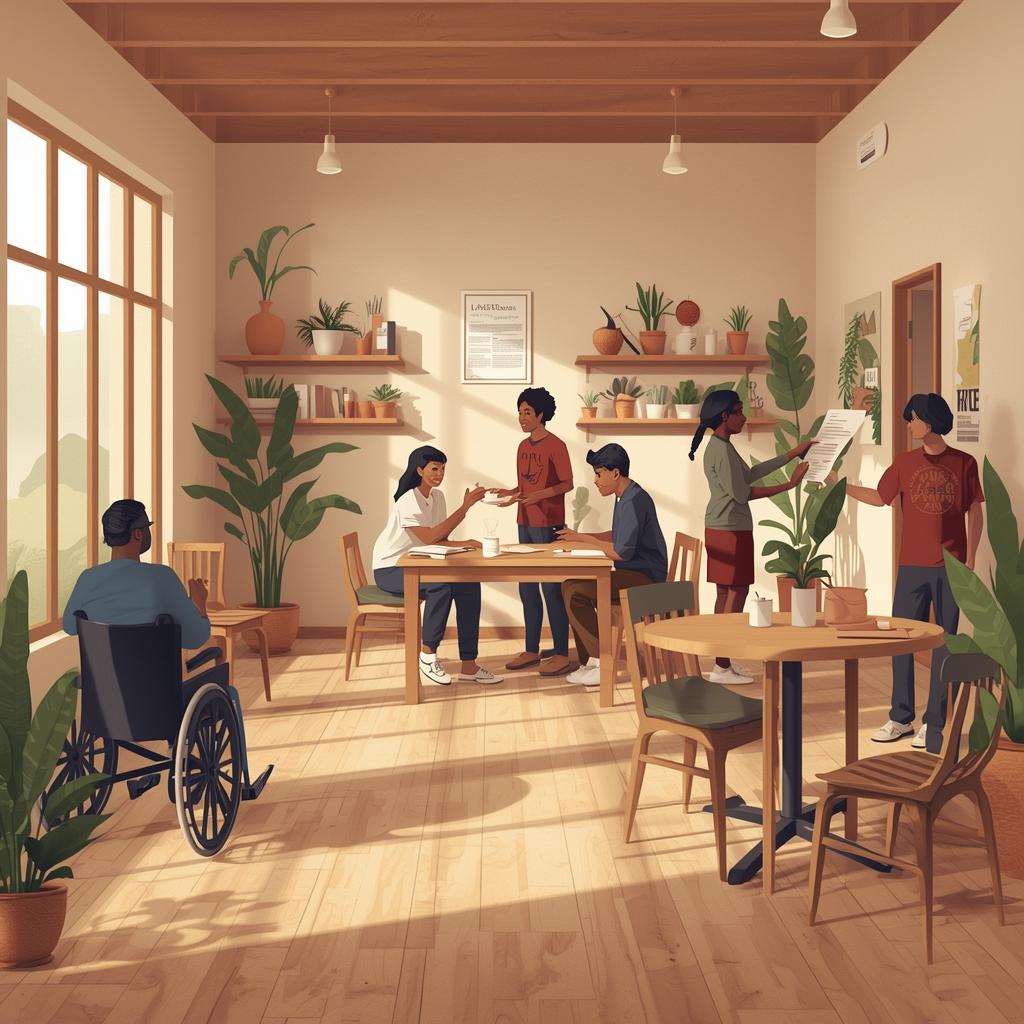
Strategic partnerships strengthen reach and resource sharing. Collaborations with local nonprofits and mutual aid groups focus on food distribution, housing referral nights, and legal clinics. School and university partnerships support internships and credit-earning practicums. Local artists and musicians receive small stipends and priority booking for community nights. Food suppliers are prioritized from within a 100-mile radius where possible, and fair trade vendors are used for coffee, chocolate, and imported pantry items.
Accessibility practices include sliding scale and pay-what-you-can policies with clear guidelines for offered concessions. ASL interpretation is provided on request with at least 72 hours notice. Sensory-friendly hours feature dimmed lighting and minimal amplified sound. A published safer space policy outlines expected behaviors, a reporting process, and on-site safety stewards trained in nonviolent intervention. Language access efforts include translated flyers in the most common local languages and outreach through community radio and neighbourhood associations.
Booking and venue logistics are straightforward. Event hosts submit a proposal form and receive a written agreement that covers licensing, permits, and insurance requirements. Typical rental rates are tiered for nonprofit, community, and private uses, and kitchen use is negotiable depending on staff availability. The venue supports up to 70 seated guests or 110 standing for performances. AV support includes projector, PA, and livestreaming on request.
Volunteer governance is essential for sustainability. Volunteer roles include front-of-house, kitchen support, event stewarding, and communications. Volunteers receive basic training in connection to safety practices and are eligible to join event organizing committees. A small grant fund supports volunteer-led programming and covers materials for community-led skillshares. Community advisory meetings are scheduled quarterly and solicit feedback through anonymous surveys and in-person listening sessions.
Before a short bulleted sequence, the paragraph introduces volunteer engagement and then presents the roles.
- Front-of-house hosts who manage welcome tables and sliding scale contributions.
- Kitchen assistants trained in allergen-safe prep and batch service.
- Event stewards trained for safety and accessibility needs.
After the list, information continues on promotion and impact measurement.
Promotion strategies combine social media, email newsletters, physical posters on community boards, and outreach through partner organizations. Inclusive promotion uses accessible imagery, clear content warnings, and translation for priority languages. Attendance tracking gathers anonymized demographic data when consented to, and post-event feedback collects qualitative stories used in annual partner reports and fundraising outcomes.
To get involved, prospective hosts submit a proposal via the cafe contact form, can access a starter packet with timeline templates and contracts, and may apply for co-host sponsorships. Volunteer sign-up is available online with scheduled training. A public calendar lists recurring series, seasonal highlights, and one-off signature nights so neighbors can plan participation and support ongoing community resilience.